The dissolved gas
Hydrogen concentration tells you how much H₂ is in the water, usually measured in parts per million.
Molecular hydrogen & the seven waters
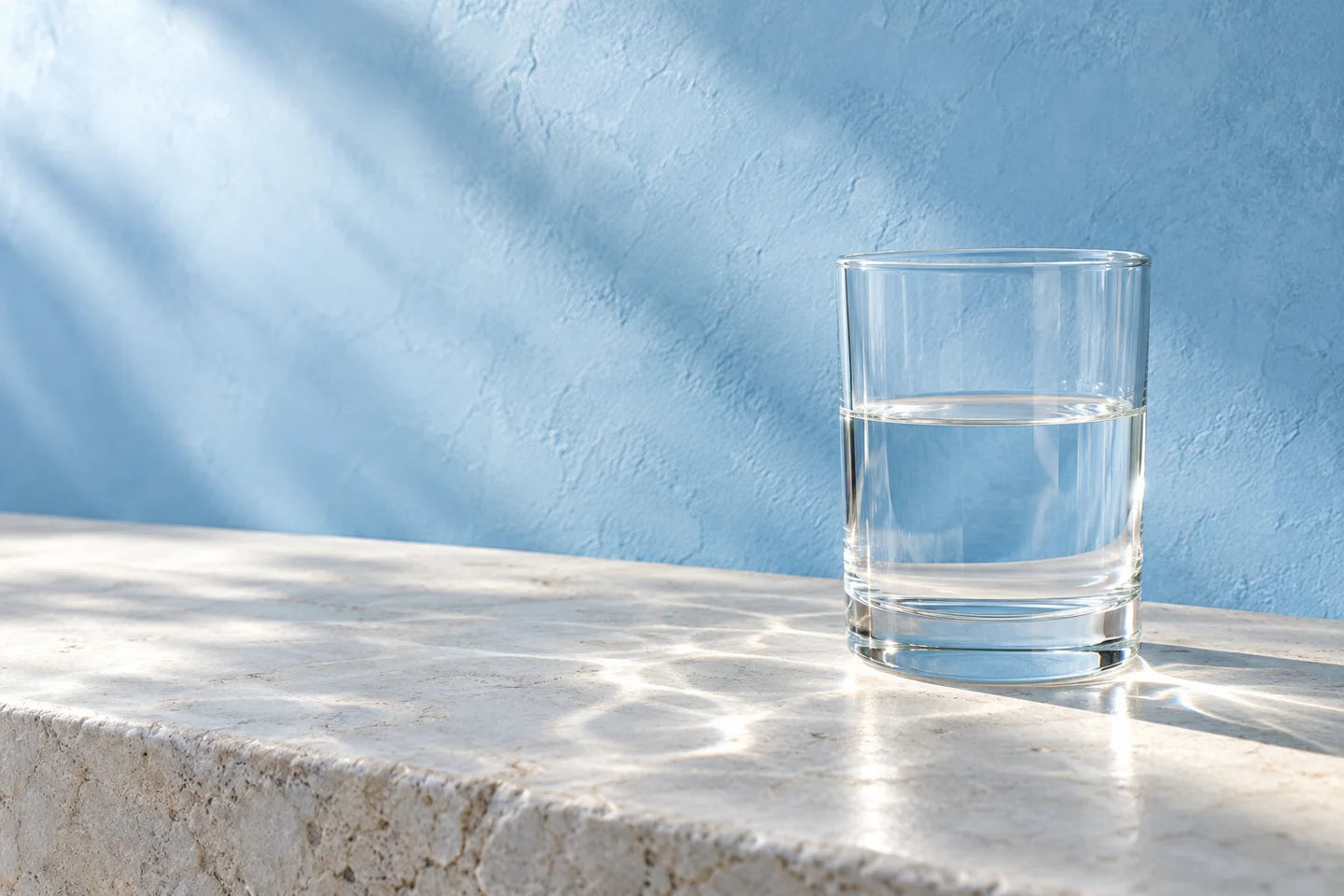
It looks like an ordinary glass of water. Inside it is dissolved molecular hydrogen, a tiny molecule being studied for its potential role in recovery and health.
Start with the basics
Hydrogen-rich water is drinking water with extra hydrogen gas dissolved in it. You may also hear it called molecular hydrogen water or H₂ water.
The hydrogen already bound into H₂O is part of the water molecule. The additional H₂ is a separate, dissolved gas. That is the part researchers are interested in.
Hydrogen concentration tells you how much H₂ is in the water, usually measured in parts per million.
pH describes acidity or alkalinity. A higher pH does not, by itself, mean more hydrogen.
Why people are interested
Recovery after exercise, the body's response to oxidative stress, and metabolic health are among the areas attracting research attention.
A small human trial found less muscle soreness and better recovery of jump performance after demanding training. It is a promising reason to keep exploring.
Look at the recovery study ↓Researchers are exploring how molecular hydrogen may influence oxidative stress, the balance between reactive molecules and the body's protective systems.
Look at the health study ↓A 24-week trial in adults with metabolic syndrome reported changes in blood sugar, total cholesterol and several inflammation markers.
Explore what was measured ↓These are potential benefits under study. Results depend on the people, preparation and amount of hydrogen used; they do not establish the same effects from this machine or every glass.
One machine. Seven settings.
Three H2 drinking settings, neutral filtered water, and three waters for external care or cleaning. Tap a setting to see what it is used for.
An introduction to the three H2 drinking settings. The number describes the machine setting, rather than a measured hydrogen dose.
Another of the machine’s three H2 drinking settings, with a nominal pH of 9.0.
The highest-pH of the three drinking settings. This setting is also used for food preparation.
The neutral setting provides filtered water without selecting one of the alkaline H2 settings.
This slightly acidic setting is used for skin and hair care, rather than drinking.
Despite the H2 name, this is a non-drinking water. Its everyday use is helping loosen grease and oily marks.
This water is for external cleaning uses specified by the machine instructions. Its pH alone does not establish disinfecting performance.
These are the nominal settings used in this guide. Actual pH and dissolved hydrogen vary with source water and operating conditions. The labels “H2 level 1, 2 and 3” identify settings, not confirmed increasing hydrogen concentrations.
Four drinking settings. Three that are never for drinking.
Keep external-use waters in separate, clearly labelled containers. Always follow the instructions for the machine and the surface or use involved.
A closer look at the research
These studies investigate hydrogen-rich water. Neither is a clinical test of the machine or water served here.
In a randomised crossover trial, 12 elite finswimmers received hydrogen-rich water and placebo during separate four-day periods. At 12 hours after the second training session, soreness scores were 34 versus 42, and jump height was 30.7 versus 29.8 cm, favouring hydrogen-rich water.
The study used packaged water measured at 0.9 ppm H₂. It was a small group of trained athletes, with results at a particular recovery time.
Read the 2024 recovery study ↗ (opens in a new tab)A randomised trial followed 60 adults with metabolic syndrome for 24 weeks. The hydrogen-rich water group showed improvements in total cholesterol, blood glucose and several oxidative-stress and inflammation markers.
The study used a specialised high-concentration preparation. Its findings apply to that study group and protocol; they do not establish a treatment or the same results from ordinary machine-produced water.
Read the 2020 metabolic study ↗ (opens in a new tab)
A free book to keep
Take a little more time with the subject. Explore molecular hydrogen, the human research and the seven water settings, then keep your own observations in the twelve-week water journal.
Download the free book ↓ (PDF, opens in a new tab)Keep exploring
No. Hydrogen-rich means that H₂ gas is dissolved in the water. Alkaline describes a pH above 7. A machine can affect both, but pH does not measure hydrogen concentration.
The machine has settings for different purposes: three alkaline drinking settings, neutral filtered water, one external skin and hair setting, and two stronger cleaning settings. They are not seven strengths of drinking water.
Hydrogen gas itself has no taste or smell. Any taste difference can come from the source water, filtration or mineral balance.
Dissolved hydrogen escapes over time. Storage time, the container, its seal, temperature and opening it all matter. Freshly prepared water gives the clearest starting point; there is no universal 24-hour or 36-hour hydrogen guarantee.
The 9.5 setting is used for tea, coffee and cooking. Heating and boiling can release dissolved hydrogen, so a hot drink should not be assumed to deliver the same hydrogen dose as freshly prepared drinking water.
No. A higher pH does not prove more hydrogen or a greater health benefit. The strongest alkaline and acidic settings are for external use and must never be drunk.
Use only a drinking setting and follow the machine instructions. Hydrogen water is not a replacement for prescribed treatment. If you have kidney disease, a fluid restriction or a condition affecting water or mineral intake, ask your clinician which water is appropriate.